
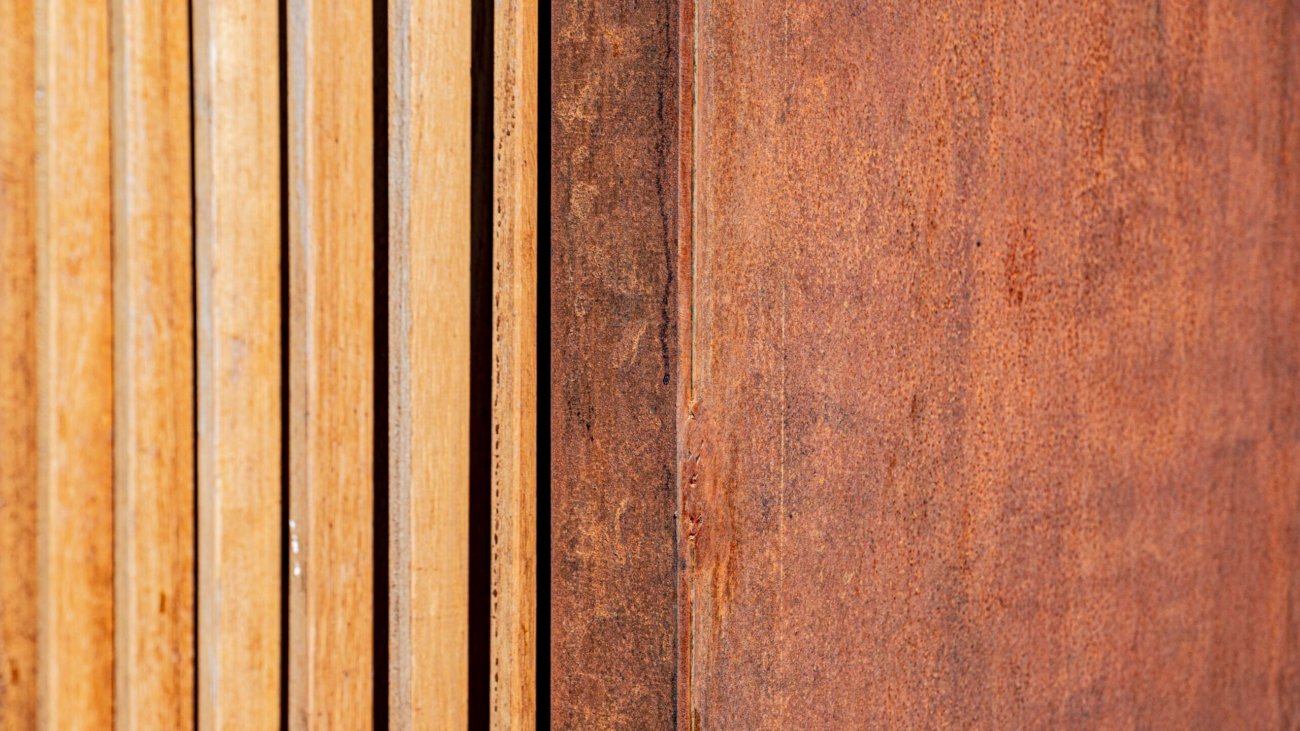
Due to moisture from rain and humidity as well as heat and changing temperatures, the ability of plywood to be used outdoors will depend on the type of plywood supplied as well as the way it is treated and how well it is installed. Therefore, you should purchase only the best quality plywood from manufacturers that continue to produce high-quality plywood products such as Wallmark Plywood, who have been making commercial-grade plywood products for 20 years and whom you can trust to supply plywood that meets your expectations.
Exterior-Grade Plywood: An Overview
Plywood is made with multiple layers of wood veneers that are glued together with high-quality glue and then compressed with heat and pressure. The cross-laminated design produces an extremely strong, stable, and warp-resistant product.
However, a product’s physical properties are not enough for exterior applications. Exterior products also need to be:
- Moisture resistant
- Able to withstand prolonged exposure to adhesives (bonding)
- Able to resist termites and borers
- Dimensional stability is the capacity to maintain size and shape throughout time.
Because exterior-grade plywood is made with high-quality hardwood veneers and waterproof adhesives, it can be used in damp settings where plywood will frequently come into touch with moisture. Finished grade exterior plywood is manufactured under strict conditions and passes through rigorous testing before being sold; this ensures the product’s long term performance in site conditions.
Uses of Plywood for Outdoor Projects
Plywood is an ideal material for many outdoor projects if you select the correct grade of plywood and seal it properly. Here are just a few examples of where plywood can be utilized in outdoor applications:
1) Outdoor furniture
Garden benches, patio chairs, and outdoor cabinets can all be constructed using water-resistant plywood that has been sealed and finished to withstand the elements.
2) Exterior siding
While you shouldn’t apply finished plywood directly to a flat surface and expect it to survive extreme rain, there are many applications of finished plywood to be used as an exterior material. For example, plywood may be used as an exterior panel and then be treated with a clear or opaque finishing material.
3) Roofing and Subflooring
Exterior-grade plywood is a common choice for providing structural support and moisture protection when used as roof sheathing or structural subflooring in new construction.
4) Signboards and Hoardings
Plywood is a great material for creating signage (as long as it is sealed) because of its ability to hold shape and durability.
5) Temporary site structures
Scaffolding platforms, temporary walls or dividers, and form boards are all commonly constructed using plywood by building contractors.
What Makes Plywood Suitable for Exterior Use?
Exterior plywood is not created equal, and there are some things to consider for determining if it is right for you. Here’s how to choose:
- Waterproof Bonding
The best exterior plywood is made with superior adhesive to resist delaminating from moisture exposure.
- Hardwood Core Construction
Hardwood veneer will give you a stronger, more durable product than would a softer wood core.
- Termite and Borer Treatment
With the added risk of infestation outdoors, treating exterior plywood with chemicals can extend its life.
- Dimensional Stability
Quality plywood is designed to stay true to its shape throughout changing seasons or environments, so that cracks and warpage will not occur.
At Wallmarkply, each sheet is made from only the best hardwoods, bonded with a high-quality adhesive, so that they will last and perform in the most demanding circumstances.
Marine Ply vs Commercial Ply for Outdoor Use
Many people believe that you can use any type of plywood outdoors; that is not correct.
- Plywood classified as commercial is appropriate for interior and semi-protected exterior locations.
- Marine grade plywood is intended to be used when it will be exposed to high levels of humidity.
When completing a fully exposed, outdoor project in a coastal area, such as Kerala, it is highly recommended that you use a marine-grade plywood because it will have a superior bond and will be able to resist moisture better than other types of plywood.
The right grade of plywood depends upon how much exposure it will have to the elements. By consulting an expert prior to making your purchase, you can ensure that you do not make any expensive mistakes.
Tips for Extending the Life of Exterior Plywood
Even high-quality plywood needs appropriate treatment for outdoor use. Here are some simple yet effective ways to care for your plywood:
1. Apply a Protective Sealant
Waterproof sealants will act as a barrier against moisture and start to protect the plywood from any future water damage before any water can get in.
2. Make Sure Plywood is Installed Properly
Make sure plywood is elevated and has drainage underneath to minimize the amount of water penetrating the plywood.
3. Edge Sealing is Extremely Important
Moisture can easily penetrate the edges of plywood. Therefore, edge sealing will significantly increase the durability of the plywood.
4. Regular Maintenance is Required
Periodic inspections of your exterior plywood structures will help ensure they are maintained and refinished to extend their useful life.
Exterior plywood can provide reliable service for many years, with proper application and maintenance.
Is Plywood More Suitable than Solid Timber for the Outdoors?
Changes in weather can lessen the ability of hardwoods to resist twisting, breaking and loosening of their joints through expansion and contraction. Plywood’s cross-grain construction therefore limits this type of movement in its structure, giving greater stability to its dimensions.
Also, higher-quality plywood can give:
- Improved distribution of loads
- More consistent strength throughout its length
- Smoother surface suited for CNC machining
- More economical than solid wood of the same size.
Plywood provides architects and designers with versatility when looking for durability and accuracy in their design.
When Should You Avoid Using Plywood Outdoors?
While exterior-grade plywood has great durability suitable for different applications, be sure to consider the following before using plywood outside:
- Continuous immersion in water
- Burial in soil without prior treatment
- Zero maintenance areas
Understanding the limitations of each material will assist you in making a well-informed decision as to which material is best suited for a specific application.
Final Thoughts: Is Exterior Plywood Worth It?
So, can a plywood sheet be used outdoors? The answer is yes! Provided you use the right grade of plywood and correctly install it with enough protection.
Exterior-grade plywood has strong characteristics, versatility, and durability, making it a viable option for many outdoor applications. However, the success of exterior-grade plywood depends on thorough manufacturing, moisture-proof bonding techniques and installation by professionals.
At Wallmarkply we recognize that the climate is challenging for Indian consumers, especially in areas with high humidity. Therefore, our plywood products have been engineered based on how well they perform, hold up and look so consumers can have confidence when they purchase from us.
If you’re starting a project that is subject to the elements, use exterior-grade plywood that has passed tests for strength, provides for moisture resistance, is built to last and manufactured expertly.
Add a Comment
You must be logged in to post a comment